
Infusing Research Throughout the Solution Development Lifecycle

Part 1: Understanding a Demand Planner’s Needs and Pain Points
In the fast-paced world of supply chain management, demand planners play a critical role in ensuring the right products are available at the right time and in the right place. Their decisions impact inventory levels, production schedules, and ultimately, customer satisfaction. Through our regular conversations with our in-house experts and industry professionals, we recognized several key challenges that demand planners face.
Accessible Real-time Data: Demand planners are not confined to a single location. They often move between meetings, warehouses, and supplier visits. This indicates the need to access real-time data wherever they are. Traditionally, they rely on desktop-based analytics tools, spreadsheets, and enterprise systems to gather insights and make decisions. However, these tools often tether them to their desks, limiting their ability to act swiftly in critical moments.
Urgent Decision Needs: Planners are constantly responding to shifting market conditions, supplier constraints, and unexpected disruptions (e.g., demand spikes, production delays, natural disasters or logistics issues). Quick assessments and immediate actions are critical to minimize any undesired impacts. Therefore, the ability to access relevant insights instantly can be the difference between a smooth recovery and a costly setback.
Cross-functional Collaboration: Demand planning is highly collaborative, involving stakeholders from procurement, sales, logistics, and finance. Planners often need to pull up data during discussions, making mobile accessibility a necessity for seamless communication and decision-making.
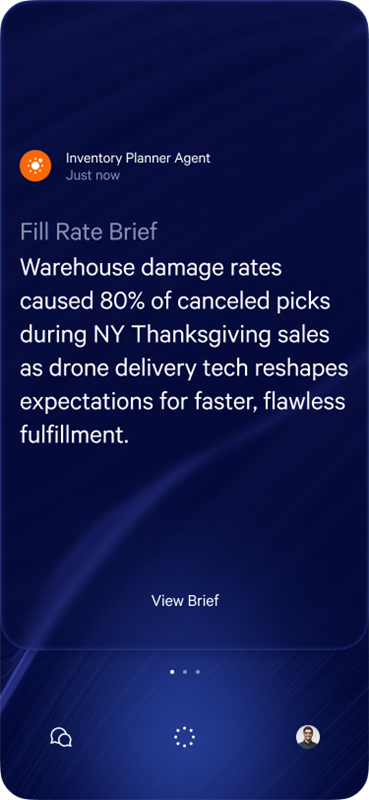
Those insights become requirements for designers, who now understand the need for a mobile app that empowers demand planners with the right data at the right time, enabling them to make smarter, faster decision-making.
Part 2: Validating Assumptions and Design
While we were confident that a mobile solution would add value, we needed to validate our assumptions and ensure we were solving the right problems. To do this, we conducted some concept testing, engaging directly with the demand planners from our customers.
Our research served two key purposes. First, it helped us confirm that planners truly needed real-time, mobile access to data and insights. Second, it allowed us to evaluate our app designs, particularly the AI-powered features, which we were uncertain about in terms of user perception and adoption.
Through our in-depth research sessions with end-users, we've gathered valuable insights that highlight the app's potential impact:
Enhanced Productivity: Users identified the app as a powerful tool for daily preparation, task prioritization, and timesaving, enabling them to focus more on critical issues.
On-the-go Convenience: The app is seen as an essential resource for planners when they are away from their computers or preparing for the next day, offering quick access to actions and information retrieval.
High Relevance: All participants could easily envision scenarios and use cases for the app, demonstrating its strong alignment with their daily responsibilities.
Seamless Integration: Users appreciated the concept of an app that complements their desktop devices, providing information and enabling certain actions while reserving high-impact tasks for desktop execution.
These insights underscore the app's potential to transform how planners manage their workflows, enhancing efficiency and flexibility in their roles.
Part 3: Refining the Concept and Conducting Usability Testing (still to come!)
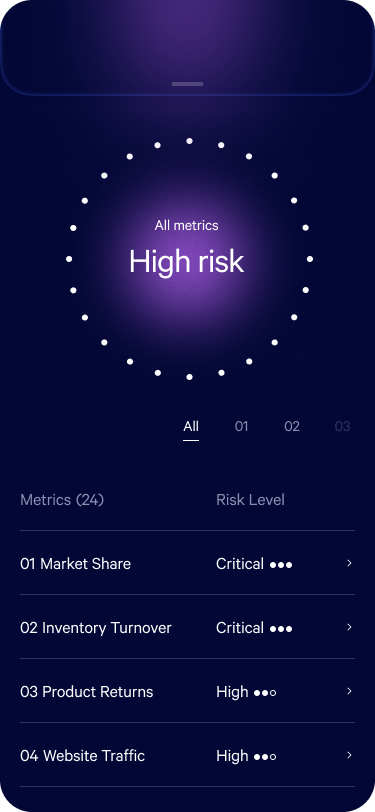
With valuable insights gathered from our initial concept testing, we are refining and iterating on the app designs. As we move forward, we will be running additional rounds of usability testing, focusing on making the app even more intuitive and user-friendly.
Our next phase will involve in-depth sessions to examine how effortlessly users can complete key tasks, uncover potential friction points, and most importantly validate the device handoff experience. We will continue to work closely with our engaged user panel, incorporating their feedback to ensure that every iteration brings meaningful improvements.
We are very excited to share more on this in the future, so be sure to check us out in the coming months!
 | A guest post by
|